




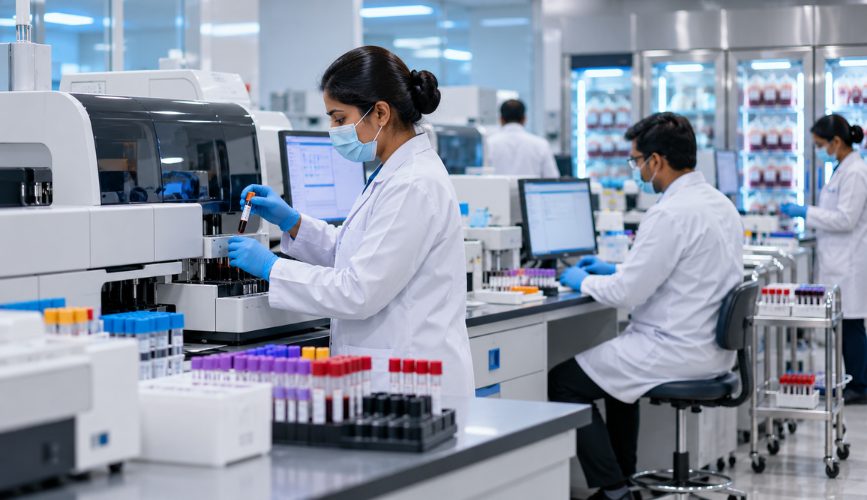
Laboratory & Transfusion Medicine
Almost every decision in hepatology depends on laboratory results, from diagnosing hepatitis to deciding when a patient needs transplant. Safe blood supply is equally vital for surgery, bleeding and critical care. Our Laboratory & Transfusion Medicine department is designed to deliver accurate results and safe transfusion, quickly and around the clock for emergencies.
Clinical Biochemistry and Haematology
- Liver function tests: SGOT, SGPT, ALP, GGT, bilirubin, albumin and total protein
- Kidney function and electrolytes: Creatinine, urea, sodium, potassium and others, essential for scoring systems like MELD-Na
- Coagulation profile: PT/INR, aPTT and fibrinogen, along with viscoelastic tests where available
- Complete blood counts: Haemoglobin, white cells and platelets
- Metabolic markers: Blood glucose, HbA1c, lipid profile, uric acid, vitamin D and B12
- Blood gases, lactate and ammonia: For critical care and rapid decisions
- Iron studies and ferritin: For haemochromatosis and iron overload
- Ceruloplasmin and urinary copper: For Wilson disease
Serology, Virology and Molecular Testing
- Hepatitis A, B, C, D and E markers: HBsAg, anti-HBs, anti-HBc, HBeAg, anti-HCV and IgM antibodies
- Viral load testing: HBV DNA and HCV RNA using quantitative methods
- Genotyping and resistance testing when clinically indicated
- HIV, CMV, EBV and other infection screening for transplant and immunosuppressed patients
- Molecular tests: For rapid identification of infections and drug resistance
Immunology and Autoimmune Testing
- ANA, ASMA, anti-LKM1 and AMA
- Immunoglobulin levels (IgG, IgM, IgA), including IgG4
- Anti-tTG for celiac disease
- Thyroid and other autoimmune markers
Tumour Markers and Genetic Tests
- AFP, CA 19-9, CEA and others
- Genetic testing for Wilson disease, hemochromatosis and other inherited conditions where available
Microbiology
- Blood, urine, ascitic fluid, sputum and wound cultures with antibiotic sensitivity
- Fungal cultures and markers
- Infection surveillance for ICU and transplant patients
- Antimicrobial stewardship programmes, guiding appropriate antibiotic use
Histopathology and Cytology
- Liver biopsy interpretation for fibrosis staging, hepatitis, fatty liver and cancer
- Frozen section support during surgery
- Cytology of ascitic fluid, bile and fine-needle aspirates
- Immunohistochemistry for tumour classification
- Specialist reporting by pathologists experienced in liver disease
Therapeutic Drug Monitoring
Transplant patients need precise levels of immunosuppressants such as tacrolimus, cyclosporine, mycophenolate and everolimus. Regular drug-level testing helps doctors balance rejection prevention against side effects. Results are prioritised so that doses can be adjusted quickly.
Point-of-Care and Emergency Testing
The emergency department, ICU and operation theatres have access to rapid bedside tests for blood gases, glucose, lactate, electrolytes and clotting. Round-the-clock laboratory services mean urgent tests are processed without waiting for the next working day.
Transfusion Medicine and Blood Bank
- Screened blood and components: Packed red cells, fresh frozen plasma, platelets and cryoprecipitate, all tested for transfusion-transmitted infections
- Blood grouping and cross-matching: Including antibody screening
- Component preparation and storage: Under monitored temperature conditions
- Transplant support: Blood group compatibility, crossmatch and reserved units for liver transplant and major surgery
- Emergency readiness: Massive transfusion protocols for major bleeding
- Apheresis and plasma exchange: Therapeutic plasma exchange for acute liver failure, ACLF and other indications where appropriate
- Patient blood management: Minimising unnecessary transfusion by optimising haemoglobin, limiting blood loss and using cell-salvage where appropriate
Quality and Safety
- Internal quality control on every run, with periodic external quality assessment
- Barcoding and sample tracking to prevent errors
- Trained technologists and pathologists with continuing education
- Compliance with recognised quality standards and regulatory requirements
- Biomedical waste management and infection control
- Clear reporting of critical values to clinicians
Preparing for Your Tests
- Some tests, such as fasting glucose, lipid profile and certain liver tests, require an 8 to 12 hour fast
- Continue prescribed medicines unless told otherwise
- Inform the staff about supplements, especially biotin, which can affect some results
- Bring previous reports for comparison
- Ask about home sample collection where available
Understanding Your Reports
Results are more meaningful in context. Your doctor will explain what values mean, how they change over time and what action is needed. Avoid comparing your numbers with internet ranges without medical advice, as reference intervals vary by method and laboratory.
Reports and Turnaround
Routine reports are usually available on the same day, while specialised tests such as genetic analysis or biopsy staining take longer. Urgent tests are reported within hours. Digital access to reports helps patients share results with their doctors easily.

