




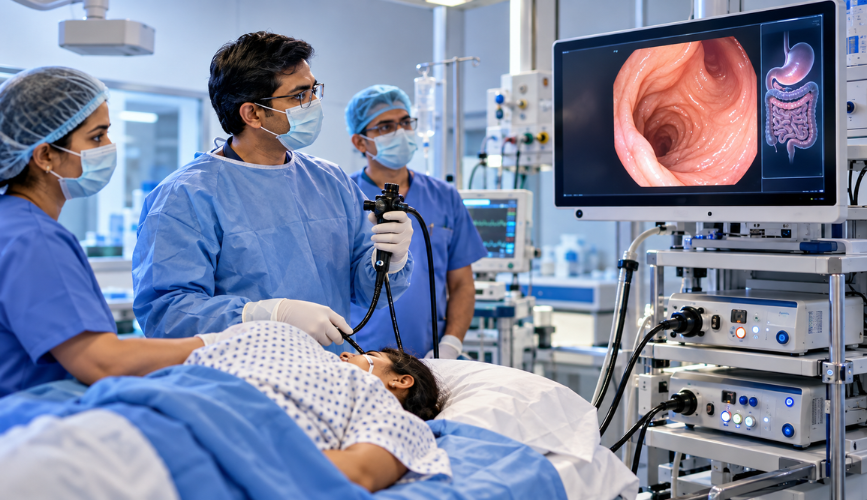
Advanced Gastroenterology & Endoscopy
Endoscopy allows doctors to examine and treat the digestive tract and bile ducts through natural openings, without large incisions. For liver patients, it is essential, since complications such as variceal bleeding, bile duct blockage and gut-related problems are common. Our Advanced Gastroenterology & Endoscopy unit combines modern equipment with experience in complex therapeutic procedures.
Services Offered
Diagnostic procedures
- Upper GI endoscopy (gastroscopy) for reflux, ulcers, bleeding, swallowing problems and screening for varices
- Colonoscopy for bleeding, altered bowel habits, inflammatory bowel disease and cancer screening
- Endoscopic ultrasound (EUS) for detailed imaging of the pancreas, bile ducts, liver and surrounding structures
- Small-bowel and capsule evaluation in selected cases
- Biopsies and tissue sampling
Therapeutic procedures
- Variceal band ligation and glue injection: To treat and prevent bleeding from oesophageal and gastric varices
- ERCP: Removal of bile duct stones, dilation of strictures, stent placement, drainage of infected bile and management of bile leaks
- Endoscopic haemostasis: Clips, injection and thermal therapy for bleeding ulcers
- Polypectomy and endoscopic mucosal resection: Removal of polyps and early lesions
- Stricture dilation and stenting: For narrowing in the oesophagus, bowel or bile ducts
- Foreign body removal
- Feeding tube placement: For patients unable to eat adequately
- EUS-guided procedures: Drainage and tissue sampling where appropriate
Special Focus on Liver-Related Endoscopy
- Variceal screening in cirrhosis: Guides decisions on beta-blockers or banding
- Emergency endoscopy for GI bleeding: Performed rapidly after stabilisation, usually within 12 hours
- ERCP in PSC, post-transplant strictures and bile leaks
- Follow-up endoscopy: To ensure variceal eradication and check stent function
- Colonoscopy in PSC with IBD: Regular cancer surveillance
Safety Standards
- Infection control: Scopes undergo validated cleaning, high-level disinfection and drying between patients, with documented tracking
- Sedation safety: Anaesthesia teams experienced in patients with liver disease tailor sedation to avoid worsening encephalopathy
- Monitoring: Oxygen levels, heart rhythm and blood pressure are tracked throughout
- Recovery area: Trained nurses observe patients until they are fully awake and stable
- Emergency readiness: Resuscitation equipment and rapid access to the ICU and surgery if required
Preparation for Your Procedure
- Fasting for 6 to 8 hours, or as instructed
- Bowel preparation for colonoscopy, with clear instructions
- Inform the team about medicines, especially blood thinners, diabetes medicines and beta-blockers
- Mention allergies and previous reactions to sedation
- Arrange an adult to accompany you home
- Bring previous reports, scans and prescriptions
What to Expect
Most diagnostic endoscopies take 15 to 30 minutes and are done under sedation. ERCP and complex therapeutic procedures may take longer. After the procedure, you rest until the sedation wears off. Mild sore throat or bloating is common. The doctor explains findings and next steps, and biopsy results follow in a few days.
Risks and Benefits
Endoscopy is generally safe, but risks can include bleeding, infection, perforation, reaction to sedation and, with ERCP, pancreatitis. Compared with the risk of untreated bleeding, blockage or cancer, the benefits usually far outweigh the risks. Your doctor will discuss individual risks before the procedure.
Coordinated Care
The unit works with:
- Hepatology OPD for variceal screening and follow-up
- Liver ICU for emergency bleeding and critically ill patients
- Interventional radiology for TIPS and other procedures when endoscopy is not sufficient
- HPB and transplant surgery for cases requiring operation
- Pathology for rapid tissue diagnosis
- Nutrition team for feeding support
Digestive Health Beyond the Liver
The unit also treats reflux disease, peptic ulcers, celiac disease, inflammatory bowel disease, irritable bowel symptoms, pancreatitis, gallstone disease and gastrointestinal cancers. Early scoping of persistent symptoms such as difficulty swallowing, vomiting blood, unexplained weight loss or anaemia can detect serious conditions in time.
After Your Procedure
Follow instructions on diet, medicines and activity. Contact the team for severe abdominal pain, fever, vomiting blood, black stools or trouble swallowing. Follow-up endoscopy may be scheduled, especially after variceal banding or stent placement, and skipping it can put you at avoidable risk.
Schedule an Endoscopy Consultation
If you have cirrhosis, jaundice, bleeding, persistent digestive symptoms or a recommendation for endoscopy, contact LiverMitra to book a consultation with our gastroenterology team.

