




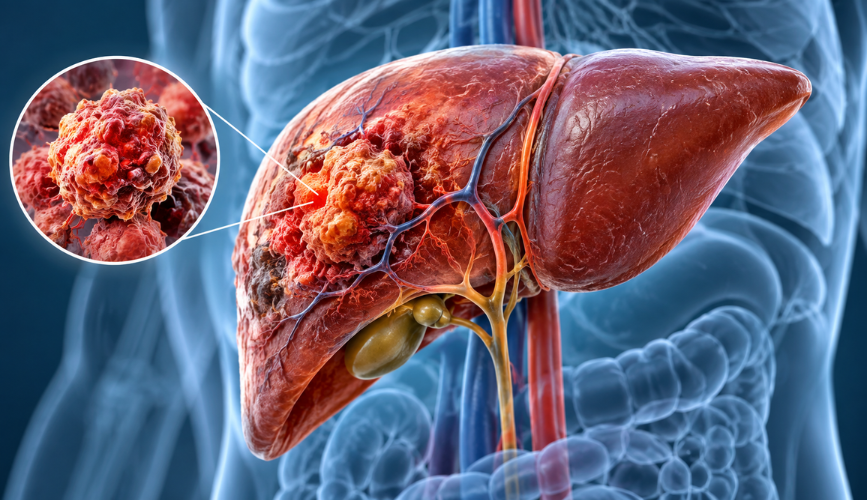
Liver Cancer
Liver cancer occurs when abnormal cells in the liver grow uncontrollably and form tumours. It can be primary, starting in the liver itself, or secondary (metastatic), spreading to the liver from another organ such as the colon, breast or lung. Metastatic tumours are more common than primary liver cancers, but they are treated according to the original cancer.
Types of Primary Liver Cancer
- Hepatocellular carcinoma (HCC): The most common type, arising from liver cells, usually on a background of cirrhosis or chronic liver disease.
- Intrahepatic cholangiocarcinoma: Cancer of the bile ducts inside the liver.
- Hepatoblastoma: A rare cancer that affects young children.
- Angiosarcoma and other rare types: Uncommon and often associated with specific exposures.
Risk Factors
- Cirrhosis of any cause
- Chronic hepatitis B or C infection, sometimes even without cirrhosis in hepatitis B
- Fatty liver disease with obesity and diabetes
- Heavy alcohol use
- Aflatoxin exposure from contaminated grains and nuts
- Hemochromatosis and other metabolic liver diseases
- Smoking
- Family history of liver cancer
Symptoms
Early liver cancer often has no symptoms. As it grows, symptoms may include:
- Unexplained weight loss and loss of appetite
- Pain or a lump in the upper right abdomen
- Feeling full after small meals
- Nausea and fatigue
- Yellowing of eyes and skin
- Swelling of the abdomen
- Worsening of existing cirrhosis, such as new ascites or confusion
Because these signs can appear late, screening is crucial for people at risk.
Screening and Early Detection
People with cirrhosis and selected patients with chronic hepatitis B should undergo ultrasound of the liver every six months, often combined with an AFP (alpha-fetoprotein) blood test. Screening allows tumours to be found when they are small and treatable, greatly improving survival.
How Is It Diagnosed?
- Multiphase CT or MRI: In patients with cirrhosis, characteristic imaging patterns can confirm HCC without a biopsy.
- AFP and other tumour markers
- Liver biopsy: Used when imaging is unclear, or the tumour type is uncertain.
- Staging tests: Assess tumour number, size, blood vessel involvement, and spread.
- Liver function assessment: Child-Pugh score and other tools guide treatment choices.
Staging systems such as BCLC help doctors match treatment to each patient.
Treatment Options
Treatment depends on tumour stage, liver function, general health, and available expertise. A multidisciplinary team, including hepatologists, surgeons, interventional radiologists and oncologists, decides the best plan.
- Surgical resection: Removes the tumour-bearing part of the liver, suitable when liver function is good and the tumour is localised.
- Liver transplant: Treats both the cancer and the underlying cirrhosis in patients who meet accepted criteria.
- Ablation: Uses radiofrequency or microwave energy to destroy small tumours without major surgery.
- Transarterial chemoembolisation (TACE) and radioembolisation (TARE): Deliver treatment directly to tumour-feeding arteries.
- Radiotherapy: Stereotactic body radiotherapy for selected tumours.
- Systemic therapy: Targeted drugs and immunotherapy for advanced disease.
- Supportive and palliative care: Manage pain, nutrition, symptoms and emotional wellbeing at every stage.
Prevention
- Get vaccinated against hepatitis B
- Test for hepatitis B and C, and treat if infected
- Maintain a healthy weight and manage diabetes
- Avoid or limit alcohol
- Avoid foods contaminated with mould or aflatoxin
- Do not smoke
- Attend regular screening if you have cirrhosis or chronic hepatitis
Living With Liver Cancer
Patients benefit from nutritional support, gentle exercise as tolerated, emotional counselling and family involvement. Treatment of the underlying liver disease continues alongside cancer therapy, since liver function strongly affects options and outcomes. Regular follow-up scans watch for recurrence, which is common in cirrhotic livers.
Outlook
Outcomes vary greatly. When detected early and treated with surgery, ablation or transplant, many patients achieve long-term control. Advanced disease is more challenging, but newer targeted and immune-based therapies have expanded options. Early detection through screening remains the single most important factor.

