




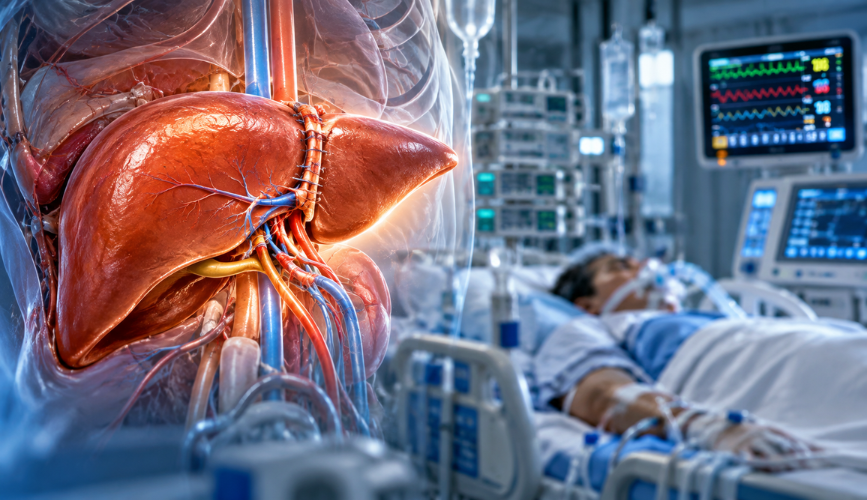
Post-Liver Transplant Critical Care
After a liver transplant, the patient is shifted from the operating room to an intensive care unit for close observation. The first days are the most delicate, because the new liver, the surgical connections, and the patient's other organs all need careful monitoring. A dedicated team of transplant surgeons, hepatologists, intensivists, anaesthesiologists, nurses and pharmacists provides round-the-clock care.
The First 24 to 72 Hours
Most patients arrive in the ICU sedated and on a ventilator, although many are weaned and extubated within hours to a day or two, depending on their condition and the surgery. During this period the team focuses on:
- Graft function: Bile production, glucose control, falling lactate, improving INR and trends in liver enzymes indicate that the new liver is working well.
- Blood flow: Doppler ultrasound checks the hepatic artery, portal vein and hepatic veins, since clots or narrowing can threaten the graft.
- Haemodynamics: Blood pressure, heart rate and fluid balance are optimised, avoiding both overload and under-filling.
- Bleeding: Drains, haemoglobin and clotting tests are monitored, and reoperation is undertaken if bleeding does not settle.
- Kidney function: Kidney injury is common after transplant, so nephrotoxic drugs are minimised and dialysis is used when needed.
- Electrolytes and sugar: Potassium, calcium, magnesium, sodium and glucose are corrected regularly.
Ventilator Weaning and Lung Care
Patients are weaned from mechanical ventilation as soon as they are awake, stable and breathing well. Chest physiotherapy, deep breathing exercises, incentive spirometry and early sitting up reduce the risk of pneumonia and collapse of the lungs. Fluid in the chest, diaphragm weakness or lung infection may prolong ventilation in some patients.
Immunosuppression
The body sees the new liver as foreign, so immunosuppressive medicines are started immediately. A typical regimen includes a calcineurin inhibitor such as tacrolimus, often combined with steroids and sometimes mycophenolate or other drugs. Drug levels are checked regularly and doses adjusted to balance rejection prevention against side effects such as kidney injury, high blood sugar, tremors, hypertension and infection. Patients must understand that these medicines are usually lifelong and should never be missed.
Infection Prevention and Control
Infection risk is high because of surgery, lines, catheters and immunosuppression. The team uses:
- Sterile line and catheter care, with early removal of unnecessary devices
- Antibiotic and antifungal prophylaxis or treatment as per protocol and risk
- Antiviral prophylaxis for cytomegalovirus (CMV) and hepatitis B where appropriate
- Isolation precautions, mask and hand hygiene for visitors
- Monitoring for fever, wound changes and new symptoms
Potential Complications
- Primary non-function or early graft dysfunction: The new liver fails to work adequately, which may need urgent re-evaluation and sometimes retransplantation
- Hepatic artery thrombosis: A serious complication that needs prompt treatment to save the graft
- Portal vein or hepatic vein problems: Narrowing or clotting of vessels
- Bile leaks and strictures: Diagnosed by ultrasound, imaging or cholangiography and treated with endoscopic or surgical procedures
- Acute rejection: Usually responds to adjustment of immunosuppression or steroids
- Kidney injury, infection, wound problems and neurological complications
Early recognition is the reason for such close monitoring in the early period.
Nutrition, Mobility and Pain Control
Feeding, often through a tube at first, starts early. Patients are encouraged to move as soon as it is safe, since early mobilisation reduces complications, speeds strength recovery and shortens the hospital stay. Pain control uses carefully chosen medicines and techniques to keep the patient comfortable without excess sedation, taking care with drugs handled by the liver and kidneys.
Moving Out of the ICU
When the graft is functioning well, organs are stable, the patient is awake, breathing comfortably and drains and lines are removed, the patient moves to a transplant ward or step-down unit. Length of stay differs between patients, and those who were very ill before surgery may stay longer. Rehabilitation, education about medicines, diet, wound care, hygiene and follow-up prepare patients for discharge.
What Families Should Know
- The first few days can be unpredictable, with ups and downs
- Patients may be drowsy, confused or emotionally low after surgery and ICU
- Visitors should follow infection-control rules
- Families will be trained in medicines, warning signs and follow-up
- Report fever, jaundice, pain, reduced urine, wound problems or confusion at once
Long-Term Outlook
Most patients recover well and return to normal daily activities, work and family life over the following months. Lifelong follow-up with blood tests, medicine adjustment and screening for complications protects the graft and general health.

