




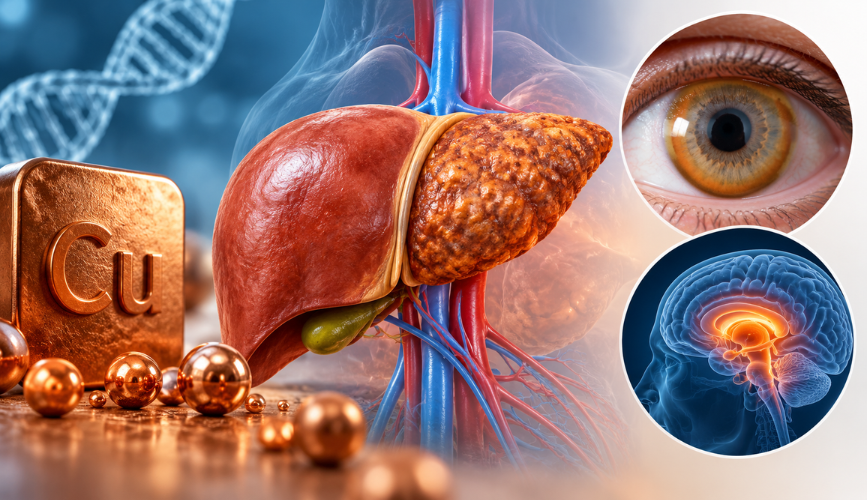
Wilson Disease
Wilson disease, also known as hepatolenticular degeneration, is a genetic disorder of copper metabolism. Copper is an essential mineral obtained from food, but the healthy liver removes any excess through bile. In Wilson disease, mutations in the ATP7B gene stop this process, and copper accumulates in the liver, brain, eyes, kidneys and other organs, causing progressive damage. The condition is inherited in an autosomal recessive pattern, meaning a person must receive a faulty gene from both parents. Parents are usually carriers and healthy.
Who Is Affected?
Wilson disease affects both males and females and usually appears between the ages of 5 and 35, though it can be diagnosed earlier or later. It should be suspected in any child, teenager or young adult with unexplained liver disease or neurological or psychiatric symptoms.
Symptoms
Wilson disease can look like many other conditions, which is why it is often diagnosed late.
Liver symptoms
- Fatigue and weakness
- Jaundice and abdominal swelling
- Persistently abnormal liver tests
- Acute hepatitis, chronic hepatitis or cirrhosis
- Sudden liver failure, sometimes with haemolytic anaemia
Neurological symptoms
- Tremors and clumsiness
- Slurred speech and drooling
- Difficulty swallowing
- Stiffness, abnormal movements or posture
- Handwriting changes and poor coordination
Psychiatric symptoms
- Mood changes, depression or anxiety
- Irritability and behavioural problems
- Declining school or work performance
- Personality changes
Other signs
- Kayser-Fleischer rings: golden-brown rings around the cornea, detected by an eye specialist
- Kidney stones or kidney problems
- Bone and joint problems
- Menstrual irregularities or repeated miscarriages
How Is It Diagnosed?
No single test confirms Wilson disease in every patient, so doctors combine several findings:
- Serum ceruloplasmin: Usually low, though it can be normal in some cases.
- 24-hour urinary copper: Usually elevated.
- Slit-lamp eye examination: To look for Kayser-Fleischer rings.
- Liver function tests and imaging: To assess liver injury.
- Liver biopsy with copper quantification: Helpful in uncertain cases.
- Genetic testing: Identifies ATP7B mutations and helps screen relatives.
- Brain MRI: In patients with neurological symptoms.
A scoring system that combines these results helps doctors reach a reliable diagnosis.
Treatment
Wilson disease is treatable, but treatment is lifelong and should never be stopped without medical advice.
- Chelating agents: D-penicillamine and trientine bind copper and help the body excrete it in urine.
- Zinc therapy: Blocks copper absorption in the gut and is often used for maintenance or in patients without symptoms.
- Dietary advice: Limit foods very high in copper, such as shellfish, liver, nuts, chocolate and mushrooms, especially at the start of treatment. Check whether drinking water or cookware adds copper.
- Monitoring: Regular blood and urine tests track copper levels, treatment response, side effects and adherence.
- Liver transplant: Considered for acute liver failure or decompensated cirrhosis that does not improve with medicines. A transplant can correct the underlying metabolic defect in the liver.
Neurological symptoms may take months to improve and sometimes temporarily worsen when treatment begins, so close supervision by an experienced team is essential.
Family Screening
Siblings of a patient with Wilson disease have a significant chance of also being affected and should be tested, even if they feel well. Early treatment before symptoms begin can prevent the disease from developing. Parents and other relatives may also be advised on screening and genetic counselling.
Living With Wilson Disease
- Take medicines regularly at the correct times, since some must be taken on an empty stomach
- Never stop treatment on your own, even when you feel completely well
- Attend all follow-up appointments
- Avoid alcohol and unnecessary medications
- Seek supportive therapy such as physiotherapy, speech therapy or counselling if needed
- Educate family, teachers and employers so you receive support
Complications If Untreated
Without treatment, Wilson disease can lead to cirrhosis, liver failure, severe neurological disability, psychiatric illness and death. With early and consistent treatment, however, most patients enjoy a good quality of life.

