




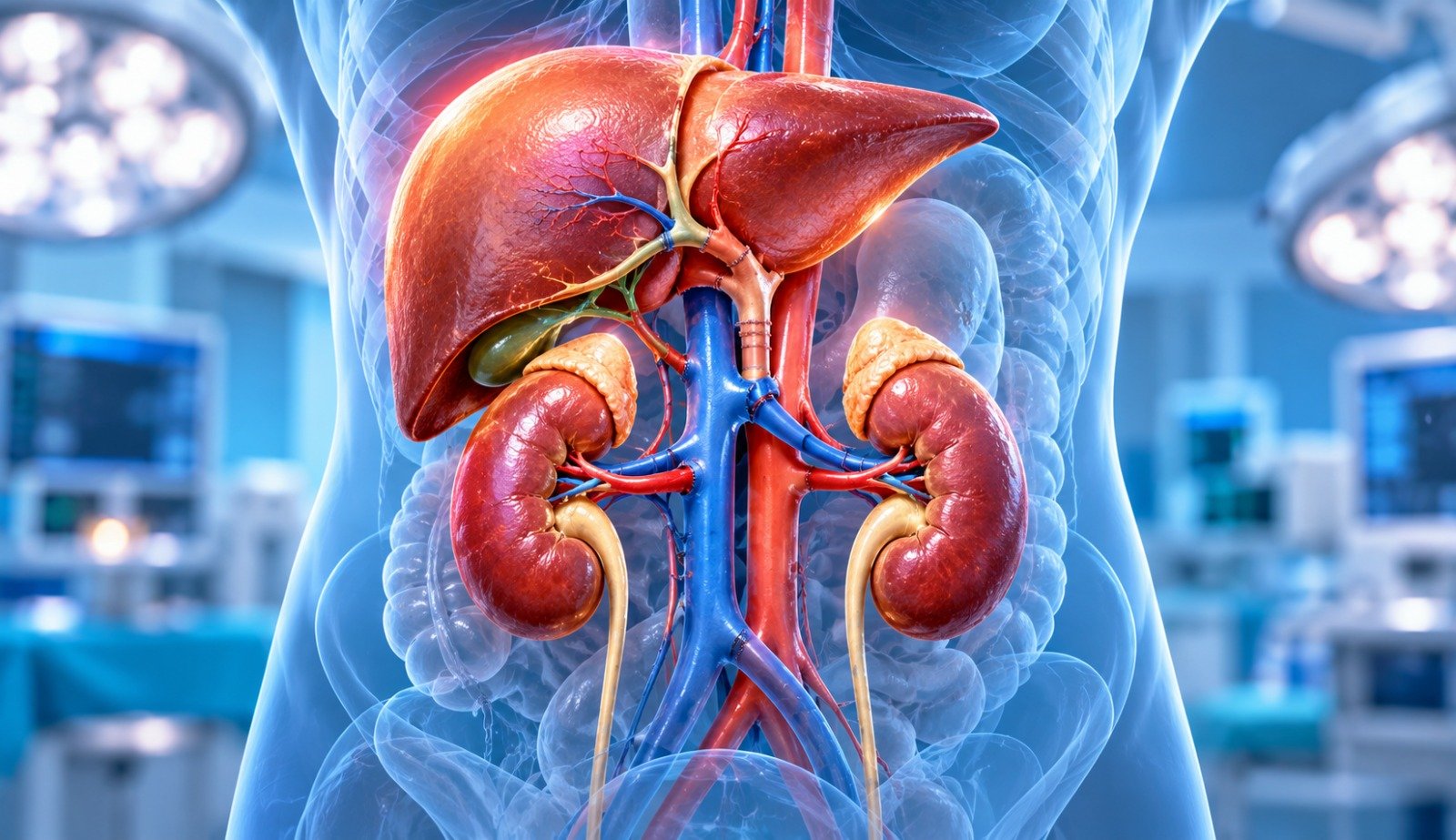
SKLT Transplant (Simultaneous Kidney-Liver Transplant)
SKLT stands for simultaneous kidney-liver transplant. It is a combined operation in which a patient receives both a liver and a kidney from a donor, typically from the same deceased donor, in a single surgical session. It is intended for patients whose liver and kidneys have both failed or are severely damaged, and whose kidney function is not expected to recover after a liver transplant alone.
Why Do Liver and Kidney Failure Occur Together?
The liver and kidneys are closely linked. Advanced liver disease can affect kidney function through several mechanisms:
- Hepatorenal syndrome: Kidney function declines because of circulatory changes in advanced cirrhosis. This is often reversible after liver transplant, especially if short-lived.
- Chronic kidney disease: Long-standing diabetes, hypertension or other kidney conditions may coexist with liver disease.
- Acute kidney injury: Infections, bleeding or medications can cause acute damage, which may become persistent.
- Inherited or systemic diseases: Conditions such as polycystic liver and kidney disease or primary hyperoxaluria can affect both organs.
Distinguishing reversible from irreversible kidney injury is central to deciding whether SKLT is needed.
Who Is a Candidate for SKLT?
SKLT may be considered for patients with end-stage liver disease and one or more of the following:
- Chronic kidney disease with significantly reduced kidney function over an extended period
- Patients on regular dialysis for a prolonged duration, particularly when kidney recovery appears unlikely
- Sustained acute kidney injury or hepatorenal syndrome that does not improve
- Kidney biopsy evidence of significant, irreversible damage
- Genetic or metabolic conditions affecting both organs
Criteria for listing are defined by national and regional guidelines and are reviewed by the transplant committee for each patient.
The Evaluation Process
Evaluation for SKLT includes assessment of liver disease severity, detailed kidney testing (blood and urine studies, imaging and sometimes kidney biopsy), heart and lung assessment, infection screening, nutritional review and psychosocial evaluation. Hepatologists, nephrologists and transplant surgeons jointly review the results to determine whether the kidney is likely to recover. This shared decision is important, since it avoids unnecessary kidney transplantation when the kidney could recover, and avoids leaving a patient with failed kidneys after liver transplant alone.
Alternatives to Consider
- Liver transplant alone (LTA): Suitable when kidney injury is likely reversible.
- Sequential transplant: In some cases, a liver is transplanted first and a kidney is transplanted later, when kidney function does not recover.
- SKLT: Preferred when kidney recovery is unlikely and both organs are needed.
Your team will explain why a particular option is recommended for you.
The Surgical Procedure
SKLT is performed under general anesthesia by an experienced team. The liver is usually transplanted first, followed by the kidney, after the patient is stable. In some cases, the kidney is placed after a period of preservation to allow the patient to recover from the liver surgery. The operation is long and complex, and requires careful management of fluids, blood pressure and clotting throughout.
Recovery After SKLT
Patients are monitored in the ICU, where liver and kidney function, blood pressure, fluid balance and infection risk are watched very closely. Dialysis may be needed temporarily if the new kidney is slow to start working. Patients receive immunosuppressive medicines, and doctors adjust doses carefully to protect both organs. Hospital stay is often longer than for liver transplant alone. Nutritional support, physiotherapy and early mobilisation are important parts of recovery.
Benefits of SKLT
- Treats both failing organs in a single coordinated approach
- May avoid the need for long-term dialysis
- Reduces the need for a second major operation in appropriate patients
- Can improve energy, appetite and overall quality of life
- Offers a chance for long-term survival when both organs are severely diseased
Risks and Considerations
SKLT carries the risks of both liver and kidney transplantation, including bleeding, infection, blood vessel or urinary complications, rejection of either organ, delayed kidney function and side effects of immunosuppressive drugs. Patients undergoing SKLT are often more unwell than those needing a single organ, so careful optimisation and expert perioperative care are crucial. Your team will discuss expected outcomes honestly, taking your specific health into account.
Long-Term Care
After discharge, patients attend regular follow-up visits with blood tests to monitor both liver and kidney function. Blood pressure, blood sugar and cholesterol control, a kidney-friendly and liver-friendly diet, avoidance of harmful medicines and strict adherence to prescribed treatment support long-term success. Vaccination and infection prevention remain important.
Why Choose Our Team?
Our SKLT care is delivered by a coordinated group of liver transplant surgeons, kidney transplant surgeons, hepatologists, nephrologists, transplant anesthesiologists, intensivists, dietitians and coordinators. We provide clear counselling, transparent guidance on listing and compassionate support for patients and families.
Book a Consultation
If you or a family member has combined liver and kidney disease, early evaluation is key. Contact our transplant team to discuss whether SKLT is the right treatment for you.

