




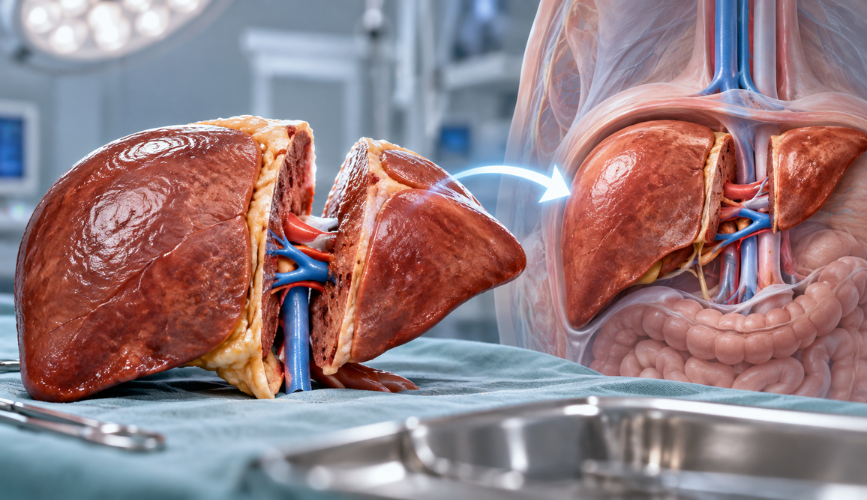
Split-Liver Transplant
Split-liver transplant is a surgical technique in which a single liver from a deceased donor is divided into two functional grafts and transplanted into two different recipients. Because the liver has separate segments with their own blood supply and bile drainage, it can be divided carefully so that both parts function independently. The technique makes better use of a scarce resource and offers hope to more patients from a single donation.
Why Split-Liver Transplant Matters
The number of patients needing a liver transplant far exceeds the number of available donor organs. Children are particularly affected because they need small grafts, and suitable pediatric donors are rare. Splitting a liver allows a child to receive a small graft while an adult receives the larger portion, reducing waiting-list mortality and making the most of every donated liver.
Types of Split-Liver Transplant
- Adult-child split: The left lateral segment (segments 2 and 3) goes to a child or small adult, and the extended right lobe goes to an adult. This is the most common form.
- Adult-adult split: The liver is divided into a right and left lobe for two adults of smaller build. This is technically more demanding and requires very careful selection.
Who Is Suitable as a Donor Liver?
Not every deceased-donor liver can be split. Ideal donors are usually young, hemodynamically stable, have minimal time on life support and have a liver with good function and little fat. Imaging and intraoperative assessment confirm suitable anatomy. The transplant team makes the final decision, always putting the safety of both recipients first.
Who Can Receive a Split Graft?
Recipients are matched by blood group, size, and medical condition. Children with biliary atresia, metabolic liver disease, acute liver failure, or other end-stage conditions are common recipients of the left lateral segment. Adult recipients receiving the larger portion generally have adequate body size, stable condition and a disease severity appropriate for a partial graft. Careful matching helps ensure enough liver volume for each patient.
Splitting Techniques
There are two main approaches:
- Ex-situ splitting: The liver is divided on the back table after removal from the donor, in a controlled setting with cold preservation.
- In-situ splitting: The liver is divided inside the donor while blood is still flowing, before organ removal. This can reduce cold ischemia time and bleeding but requires an experienced team and a stable donor.
The technique chosen depends on donor stability, logistics and team expertise.
The Transplant Procedure
Each recipient undergoes surgery to remove the diseased liver and place the graft, connecting the blood vessels and bile duct. The two operations are coordinated, often in different operating rooms and sometimes at different centres. After surgery, recipients are monitored in intensive care for graft function, blood flow and signs of complications. They then follow the standard post-transplant care plan, including immunosuppression, regular monitoring and follow-up.
Benefits
- One donor liver can save two lives
- Expands the donor pool and reduces waiting times
- Provides properly sized grafts for children
- Reduces pressure on living donors, since children can receive a graft from a deceased donor
- Uses organs that might otherwise go to only one recipient
Risks and Considerations
Split-liver transplant is technically complex. Risks include bleeding from the cut surface, bile leaks, vascular complications, infection, rejection, and, in some cases, a graft too small for the recipient's needs. Outcomes depend strongly on donor quality, recipient selection, and surgical expertise. With appropriate selection and experienced teams, results in suitable patients are good, and your surgeon will explain your specific risks and expected outcomes.
Recovery and Follow-Up
Recovery is similar to other liver transplants. Patients stay in hospital for a period of intensive monitoring and then move to regular follow-up with blood tests, imaging and medication review. Children require special attention to growth, development, nutrition, vaccination and school reintegration. Adults are guided on diet, activity and long-term health.
Our Expertise
Our team includes surgeons trained in advanced liver-splitting techniques, pediatric hepatologists, transplant anesthesiologists, radiologists and dedicated coordinators. We evaluate each available donor liver carefully and work with allocation authorities to ensure that grafts are used fairly and effectively.
Talk to Our Team
If your child or a family member is awaiting a liver transplant, ask our team whether a split-liver graft may be suitable. Contact us for a detailed consultation and evaluation.

