




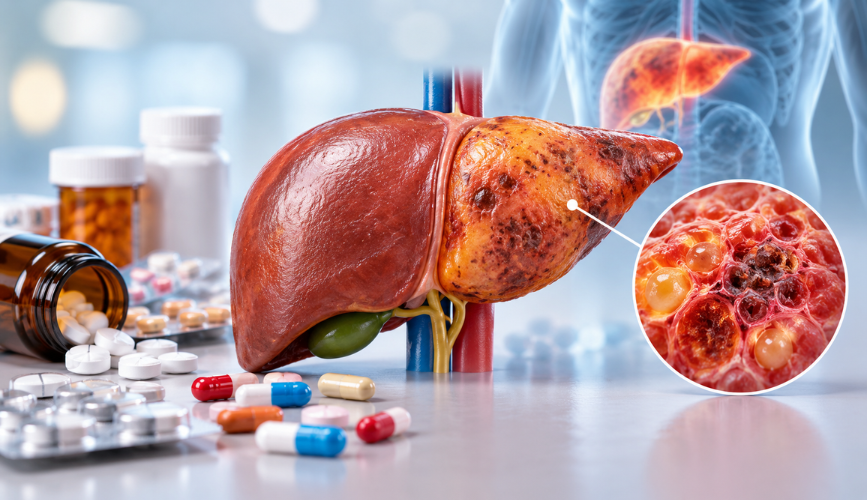
Drug-Induced Liver Injury
The liver processes almost every medicine, supplement and herbal preparation we take. Sometimes this process produces harmful by-products, or the immune system reacts to a drug, leading to liver damage. This is called drug-induced liver injury (DILI). It ranges from mild enzyme elevation with no symptoms to acute liver failure requiring emergency care or transplant.
Common Causes
- Pain and fever medicines: Paracetamol (acetaminophen) overdose is a leading cause of acute liver failure. Some anti-inflammatory drugs can also affect the liver.
- Anti-tuberculosis drugs: Isoniazid, rifampicin and pyrazinamide are important causes, particularly in India.
- Antibiotics: Amoxicillin-clavulanate and several others.
- Anti-epileptic drugs: Such as valproate and phenytoin.
- Cholesterol, diabetes and heart medicines: Rarely, some can affect the liver.
- Herbal and traditional remedies: Products with unknown or unlabelled ingredients, including some Ayurvedic or "detox" preparations, can cause serious liver damage.
- Bodybuilding supplements and anabolic steroids: Frequently linked to liver injury.
Not every "natural" product is safe. Herbal medicines can be as harmful to the liver as prescription drugs.
Types of Injury
- Predictable (dose-related): The damage depends on the dose, as with paracetamol overdose.
- Idiosyncratic: Unpredictable and unrelated to dose, occurring only in susceptible individuals. Most DILI cases fall into this group.
Patterns of injury may be hepatocellular (affecting liver cells), cholestatic (affecting bile flow) or mixed.
Risk Factors
- Higher doses or long duration of treatment
- Taking multiple medicines together
- Pre-existing liver disease
- Regular alcohol use
- Older age, or genetic susceptibility
- Malnutrition or fasting
- Previous drug reaction
Symptoms
- Fatigue and weakness
- Nausea, vomiting and loss of appetite
- Pain in the upper right abdomen
- Dark urine and pale stools
- Yellow eyes and skin
- Itching, fever or rash
Symptoms may appear days to months after starting a drug. Some patients feel well, and injury is found only through routine monitoring.
How Is It Diagnosed?
DILI is a diagnosis of exclusion, which means other causes are ruled out first. Doctors take a detailed history of every medicine, herb and supplement taken, including timing and doses. Tests include:
- Liver function tests and clotting profile
- Tests for hepatitis A, B, C and E
- Autoimmune markers
- Ultrasound to check the liver and bile ducts
- Liver biopsy in unclear or severe cases
The improvement of liver tests after stopping the suspected drug is an important clue.
Treatment
- Stop the suspected drug: This is the most important step, and it must be done under medical supervision because some drugs, such as tuberculosis medicines, cannot simply be abandoned.
- Supportive care: Rest, hydration and nutrition.
- Antidote for paracetamol: N-acetylcysteine is life-saving if given early.
- Corticosteroids or other medicines: Occasionally used for drug reactions with immune features.
- Hospital care: Patients with jaundice, clotting problems or confusion need urgent admission.
- Liver transplant: Reserved for acute liver failure that does not recover.
In tuberculosis treatment, doctors often stop the drugs, allow the liver to recover and then reintroduce them carefully, sometimes with alternatives.
Prevention
- Take medicines only as prescribed and never exceed recommended doses
- Do not combine multiple paracetamol-containing products
- Avoid self-medication and unverified herbal remedies
- Inform your doctor about all supplements and traditional medicines you use
- Limit or avoid alcohol while on medication
- Get regular liver tests if you are on long-term or high-risk drugs
- Keep medicines away from children
When to Seek Immediate Help
Contact a doctor urgently if you develop yellow eyes, dark urine, persistent vomiting, severe weakness, confusion, drowsiness or bleeding while taking any medicine or supplement.
Outlook
Most patients recover fully within weeks to months of stopping the offending drug. A few develop chronic liver damage, and a small number progress to liver failure, which is why early recognition matters.

