




Surgical Management
Surgery has an important place in liver care, either to remove diseased tissue, relieve blockage, drain infection or manage the consequences of portal hypertension. Operating on a diseased liver is more risky than operating on a healthy one, so careful patient selection, planning and expert teams are essential.
Liver Resection
Removing part of the liver can be curative for selected tumours.
- Hepatocellular carcinoma (HCC): Resection is suitable for solitary tumours when liver function is preserved and there is no significant portal hypertension. Otherwise, ablation, embolisation or transplant may be better.
- Colorectal liver metastases: Surgery, often combined with chemotherapy, can offer long-term control in selected patients.
- Cholangiocarcinoma and gallbladder cancer: Surgery is considered when tumours are localised.
- Benign tumours and cysts: Removed if large, symptomatic or uncertain.
- Liver regeneration: The remaining liver can regrow, and techniques such as portal vein embolisation help enlarge the liver remnant before major resection.
Assessing Surgical Risk
Before any major operation in a patient with liver disease, doctors assess:
- Degree of liver damage using Child-Pugh and MELD scores
- Portal hypertension, platelet count and presence of varices
- Volume and function of the future liver remnant
- Nutritional state, kidney function, heart and lung health
- Diabetes, anaemia and other conditions
Patients with advanced cirrhosis or decompensation are at high risk for surgery, so alternatives or transplant are considered.
Minimally Invasive Surgery
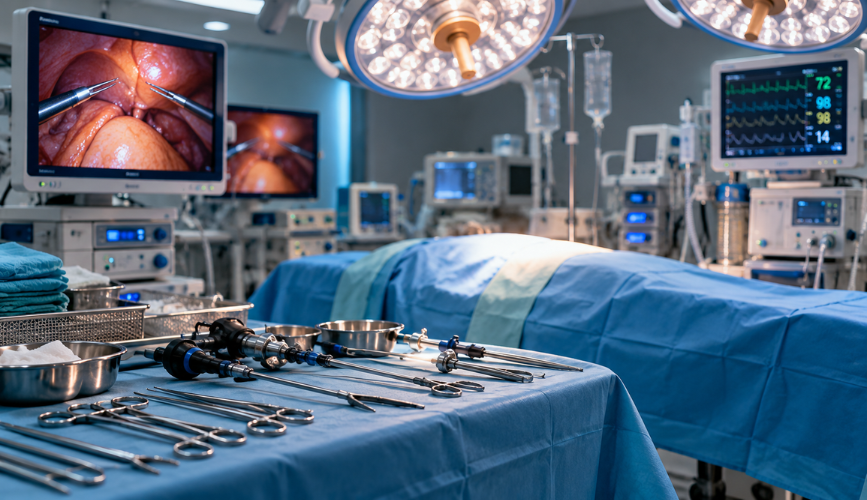
Laparoscopic and robotic techniques can reduce pain, blood loss and hospital stay in selected liver and bile duct operations. Suitability depends on tumour location, size and surgeon experience.
Biliary Surgery
- Cholecystectomy: Removal of the gallbladder for stones or infection
- Bile duct exploration and repair: For stones, injuries and strictures
- Bilio-enteric bypass (hepaticojejunostomy): Reconnecting the bile duct to the intestine when the duct is blocked or damaged
- Kasai procedure: In infants with biliary atresia, restores bile flow, though many children later need transplant
- Choledochal cyst excision: Removal of abnormal bile duct dilations
Abscess and Cyst Surgery
- Liver abscess: Most amoebic and many pyogenic abscesses are treated with antibiotics and image-guided drainage. Surgery is reserved for complicated cases.
- Hydatid cysts: Managed with medicines, drainage techniques or surgery, depending on the type and size.
- Polycystic liver disease: Fenestration or resection in symptomatic cases, and transplant in severe disease.
Portal Hypertension: Shunts and Devascularisation
- TIPS (transjugular intrahepatic portosystemic shunt): A radiological procedure that creates a channel inside the liver to reduce portal pressure, used for refractory ascites and variceal bleeding in selected patients.
- Surgical shunts and devascularisation: Used in certain situations, particularly non-cirrhotic portal hypertension and in centres where TIPS is unavailable.
- BRTO and related procedures: Radiological techniques for gastric varices.
Bariatric and Metabolic Surgery
In patients with severe obesity and fatty liver, weight loss surgery can reduce liver fat, inflammation and sometimes fibrosis. It must be planned carefully in patients with cirrhosis, and is generally considered only in compensated disease and in expert centres.
Surgery in Trauma and Emergencies
Severe liver injuries from accidents may be managed with observation, embolisation or surgery, depending on stability and grade of injury.
Liver Transplantation
When disease is beyond repair by other surgery, liver transplant replaces the whole organ. It is described separately, since it is a distinct and specialised field.
Preparing for Surgery
- Optimise nutrition and treat anaemia and infections
- Stop alcohol and smoking
- Review medicines and stop those that increase bleeding risk when advised
- Complete required tests, including imaging, heart and lung evaluation
- Discuss risks, benefits and alternatives openly
- Plan for support at home after discharge
Recovery
After surgery, patients may spend time in the ICU or high-dependency unit, where liver function, bleeding and infection are closely watched. Early mobilisation, breathing exercises, nutrition and pain control help recovery. Full recovery after major liver resection may take weeks to months, and the liver regrows over that period.
Risks
Risks include bleeding, infection, bile leaks, liver failure after surgery, fluid accumulation, blood clots and anaesthesia-related problems. These risks are higher in patients with cirrhosis and are the reason team-based evaluation is essential.
Choosing the Right Centre
Ask about the surgeon's experience with liver operations, availability of ICU and interventional radiology, and access to transplant services if needed. Complex liver surgery is best done at high-volume centres.

