




Endoscopic Management
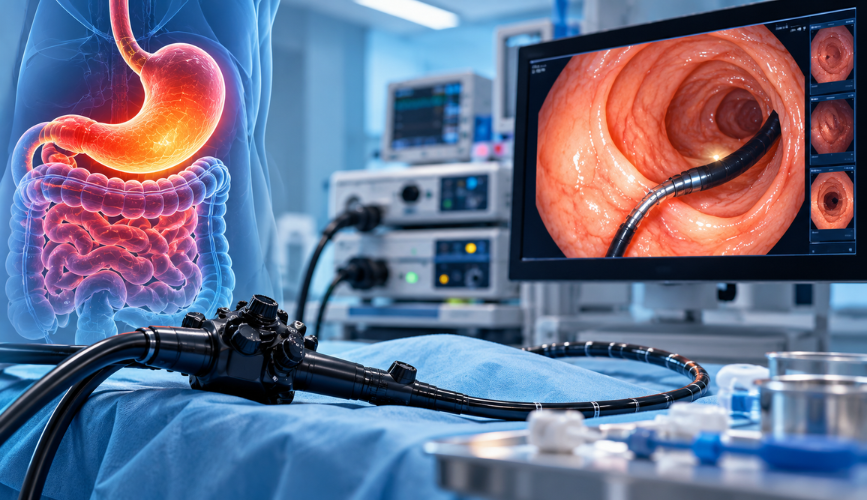
Endoscopy involves passing a thin, flexible tube with a light and camera through the mouth or another natural opening to view and treat the digestive tract. In liver care, it plays a central role because many complications of liver disease affect the gut and bile ducts. Endoscopic procedures avoid large incisions, reduce pain and allow faster recovery.
Upper GI Endoscopy for Varices
Cirrhosis and portal hypertension can cause enlarged veins (varices) in the food pipe (oesophagus) and stomach. These may rupture and bleed suddenly.
- Screening: People with cirrhosis are often advised to have an endoscopy to check for varices, unless they are already on appropriate preventive treatment or meet criteria to skip it. Your specialist will decide.
- Endoscopic band ligation (EVL): Small elastic bands are placed on varices to close them off. It is used in emergency bleeding and to prevent first or repeat bleeding, and sessions are repeated until varices are eradicated.
- Glue injection: Cyanoacrylate glue is injected into gastric varices, which are less suitable for banding.
- Sclerotherapy: Injection of a hardening agent, used less often today.
- Portal hypertensive gastropathy: Managed mainly with medicines and treatment of portal hypertension.
Emergency Endoscopy for Bleeding
Patients with vomiting of blood or black stools need urgent stabilisation, medicines to lower portal pressure, antibiotics and endoscopy, usually within 12 hours. If bleeding persists or recurs, additional options include balloon tamponade as a temporary measure, self-expanding metal stents and radiological procedures such as TIPS.
ERCP: Endoscopic Retrograde Cholangiopancreatography
ERCP is used to see and treat the bile ducts and pancreatic duct.
- Bile duct stones: Removal through the endoscope
- Strictures: Dilation and stent placement, especially in primary sclerosing cholangitis and after liver transplant
- Bile leaks: Stents to divert bile and allow healing
- Obstructive jaundice: Stent placement to relieve blockage from tumours or stones
- Cholangitis: Urgent drainage of infected bile
- Sampling: Brushings or biopsies of suspicious strictures
ERCP carries specific risks, such as pancreatitis, bleeding, infection and perforation. It is therefore used mainly for treatment, while MRCP is preferred for diagnosis.
Endoscopic Ultrasound (EUS)
EUS combines endoscopy with ultrasound, giving detailed images of the liver, bile ducts, pancreas and blood vessels. It can help with:
- Evaluating bile duct stones and unexplained duct dilation
- Sampling lesions of the pancreas, bile duct and liver
- Assessing varices and portal hypertension in selected cases
- Guided drainage procedures where ERCP is not possible
Other Endoscopic Interventions
- Colonoscopy: Screening for colon cancer in patients with PSC and IBD
- Enteral feeding tubes: Placement of feeding tubes when nutrition by mouth is not enough
- Polyp and lesion removal
- Management of bleeding from ulcers and gastropathy
Preparing for Endoscopy
- Fasting is usually required for 6 to 8 hours beforehand
- Tell the team about all medicines, particularly blood thinners, diabetes drugs and beta-blockers
- Mention allergies and previous reactions to sedation
- Arrange someone to accompany you home
- Blood tests such as platelets and clotting may be checked, but low counts in cirrhosis do not always prevent safe endoscopy
During the Procedure
Most endoscopies are done under sedation or light anaesthesia and last 15 to 30 minutes, while ERCP may take longer. Patients with advanced liver disease need careful sedation, because medicines can worsen encephalopathy. Anaesthesia teams experienced in liver disease help ensure safety.
After the Procedure
- Observation for a few hours, sometimes overnight
- A sore throat or mild bloating is common
- Resume diet as advised, often starting with liquids
- Report vomiting blood, black stools, severe pain, fever or difficulty swallowing
- Follow-up endoscopy is scheduled to check variceal eradication or stent function
Risks and Benefits
Risks include bleeding, ulcers after banding, infection, aspiration and reactions to sedation. Compared with the danger of untreated variceal bleeding or bile duct obstruction, these are usually small. Endoscopic treatment can be life-saving and often avoids the need for major surgery.
Endoscopy and Long-Term Care
Endoscopic follow-up is an ongoing part of managing cirrhosis. Your doctor will set a schedule based on the size of varices, your medicines and your disease stage. Missing scheduled endoscopy can put you at avoidable risk.

