




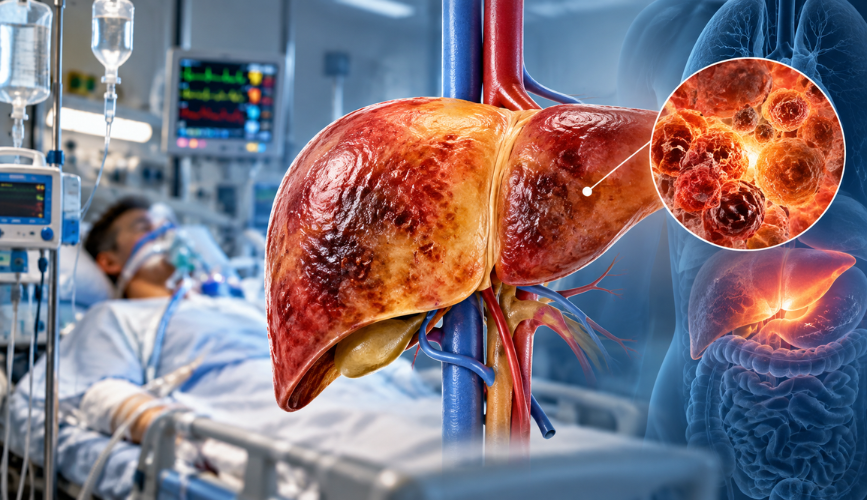
Acute Liver Failure Care
Acute liver failure is a sudden and severe loss of liver function in a person who had no known liver disease. It is usually defined by three features: jaundice or abnormal liver tests, coagulopathy (an INR of 1.5 or above) and hepatic encephalopathy (confusion or altered consciousness), developing within a few weeks of the first symptoms. Because the liver normally regenerates well, recovery is possible, but the condition can progress very fast, with brain swelling, infection and multi-organ failure. It is a medical emergency.
Causes of Acute Liver Failure
- Viral hepatitis: Hepatitis A and E are important causes in India, and hepatitis B, including reactivation, is also common. Hepatitis E is especially dangerous in pregnancy.
- Drugs and toxins: Paracetamol overdose, anti-tuberculosis drugs, some antibiotics, anti-epileptics, herbal and traditional remedies and certain mushrooms
- Autoimmune hepatitis: Sometimes presenting suddenly
- Wilson disease: Especially in young patients
- Ischaemic injury: Following shock or heart failure
- Pregnancy-related liver disease: Acute fatty liver of pregnancy and HELLP syndrome
- Other causes: Budd-Chiari syndrome, heat stroke and metabolic conditions
- Indeterminate: In a proportion of patients, no cause is found
Warning Signs
- Yellow eyes or skin that deepens quickly
- Persistent nausea, vomiting and extreme tiredness
- Confusion, irritability, unusual sleepiness or reversed sleep pattern
- Bleeding from the gums or nose, or easy bruising
- Abdominal pain or swelling
- Reduced urine output
Anyone with jaundice who becomes drowsy or confused should be taken to a hospital immediately.
Diagnosis
Doctors carry out urgent tests to confirm the diagnosis and find the cause:
- Liver function tests, INR, blood counts, glucose, electrolytes, lactate and ammonia
- Viral markers for hepatitis A, B, C and E
- Paracetamol level and drug history review
- Autoimmune markers and tests for Wilson disease
- Ultrasound with Doppler and, when required, CT or MRI
- Pregnancy test in women of childbearing age
- Assessment of brain function and grade of encephalopathy
Treatment in the ICU
Care should take place in an ICU, preferably at a centre with a transplant programme.
- Treat the cause: N-acetylcysteine for paracetamol poisoning and, increasingly, for other causes; antivirals for hepatitis B; steroids for selected autoimmune cases; delivery of the baby in pregnancy-related liver failure; removal of the offending drug or toxin.
- Protect the brain: Head elevated, avoiding unnecessary sedation, controlling sodium levels, using hypertonic saline or mannitol for raised brain pressure and preventing fever and seizures.
- Support circulation and kidneys: Careful fluids, vasopressors when needed and dialysis for kidney failure.
- Manage bleeding and clotting: Blood products are not given to correct numbers alone, but when bleeding occurs or before procedures, since clotting tests help monitor the course of the illness.
- Prevent and treat infection: Regular cultures and prompt antibiotics or antifungals.
- Maintain blood sugar and nutrition: Low blood glucose is common and dangerous.
- Liver-support therapies: High-volume plasma exchange may be used in selected patients as a bridge to recovery or transplant.
Emergency Liver Transplant
For patients unlikely to recover on their own, liver transplantation can be life-saving. Doctors use criteria such as the King's College criteria, cause of failure, age, degree of encephalopathy, INR and bilirubin to judge prognosis. Early referral is essential, because patients can move from being suitable candidates to being too sick within hours. Transplant may involve a deceased donor or a living donor, depending on urgency and availability.
Prognosis
Outcome depends on the cause, age, speed of onset, severity of encephalopathy and complications. Some causes, such as paracetamol poisoning treated early or hepatitis A, have a better chance of spontaneous recovery. Others, such as indeterminate causes or some drug reactions, more often need transplantation. Survivors, whether after recovery or transplant, generally regain good health, though some need follow-up for the underlying cause.
Prevention
- Vaccinate against hepatitis A and B
- Drink safe water and follow food hygiene to reduce hepatitis A and E risk
- Take paracetamol only as directed and never above the maximum daily dose
- Avoid unverified herbal or traditional products
- Screen for hepatitis B before chemotherapy or immunosuppression
- Seek medical monitoring while taking anti-tuberculosis and other high-risk drugs
- Seek early prenatal care and monitoring in pregnancy
What Families Should Do
Get the patient to the nearest capable hospital without delay and carry all medicine packets, prescriptions and previous reports. Tell the doctors about every drug, herb, mushroom or toxin the patient may have taken. Ask early whether the hospital has ICU and transplant facilities, and whether transfer is advisable.

