




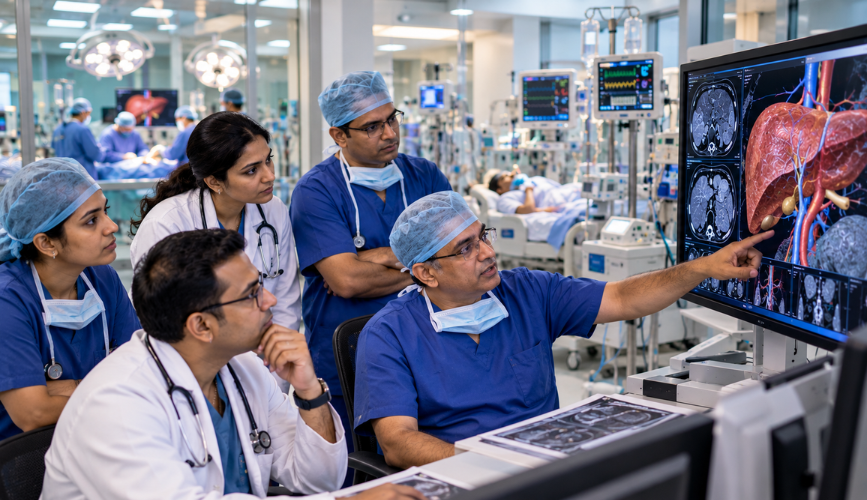
Dedicated Liver Transplant Unit
Liver transplantation is among the most complex operations in medicine, and its success depends on far more than the surgery itself. Careful selection, meticulous preparation, expert intensive care, infection prevention and lifelong follow-up all matter. The Dedicated Liver Transplant Unit brings these elements together under one team, with protocols designed specifically for transplant patients and living donors.
Who the Unit Serves
- Adults and children with end-stage liver disease and decompensated cirrhosis
- Patients with acute liver failure or acute-on-chronic liver failure
- Selected patients with liver cancer within accepted criteria
- People with metabolic and genetic liver diseases, such as Wilson disease
- Patients needing combined procedures, such as simultaneous kidney-liver transplant
- Living donors undergoing evaluation and donation surgery
- Previously transplanted patients needing follow-up care
The Transplant Team
A successful programme is built on teamwork. Our unit includes:
- Transplant surgeons for recipient and donor operations
- Transplant hepatologists who manage pre- and post-transplant medical care
- Transplant anaesthesiologists experienced in liver surgery
- Intensivists and specially trained ICU nurses
- Nephrologists, cardiologists and pulmonologists for organ assessment and support
- Infectious disease specialists for prevention and treatment of infections
- Transplant coordinators who guide families through every step
- Dietitians, physiotherapists, pharmacists and counsellors
Evaluation and Listing
Patients undergo a structured evaluation covering liver disease severity, heart, lung and kidney function, infection screening, cancer screening, nutritional status and psychosocial readiness. A transplant committee reviews each case and decides on eligibility and timing. Eligible patients are registered for deceased-donor allocation as per state and national rules, or proceed with living-donor evaluation if a suitable donor is available.
Living-Donor Programme
Donor safety is the highest priority. Donors are evaluated separately from recipients by a dedicated team, with medical tests, imaging, psychological assessment and legal approval as required under the Transplantation of Human Organs and Tissues Act. Donors receive independent counselling and can withdraw at any time. Post-donation, they are monitored in a dedicated care pathway until full recovery.
Infection-Controlled Environment
Transplant patients take immunosuppressive medicines, so preventing infection is essential. The unit uses:
- Controlled-access areas with restricted visitors
- HEPA-filtered air handling in critical zones where applicable
- Single-patient rooms or isolation options for high-risk patients
- Strict hand hygiene, sterile line care and antimicrobial stewardship
- Regular microbiological surveillance
- Guidance to families on masks, hygiene and food safety
Perioperative and ICU Care
Transplant surgery is performed in advanced operation theatres with specialised anaesthesia and monitoring. After surgery, patients move to the liver ICU for close observation of graft function, blood flow, kidney function and bleeding. Doppler ultrasound, laboratory monitoring and rapid access to radiology and endoscopy help detect complications early. Patients then progress to step-down and ward care as they stabilise.
Immunosuppression and Medication Management
Clinical pharmacists and transplant physicians manage immunosuppressive therapy, checking drug levels and adjusting doses to prevent rejection while limiting side effects. Patients and caregivers receive training on medicines, timing, storage, interactions and what to do if a dose is missed.
Rehabilitation and Education
Recovery starts early. Physiotherapists help patients walk and breathe deeply, dietitians plan nutrition and coordinators teach wound care, hygiene, warning signs and follow-up schedules. Written instructions and refresher sessions help patients feel confident before discharge.
Family Support and Counselling
A transplant affects the entire family. Coordinators help with registration, documentation and hospital procedures, while counsellors support patients and relatives through anxiety, decision-making and long waits. Financial counselling helps families understand costs and explore insurance, government schemes and support options early.
Paediatric Transplant Care
Children have unique needs, including size-matched grafts, growth monitoring and vaccination schedules. Paediatric hepatologists, anaesthesiologists and nurses provide age-appropriate care, and parents are supported throughout. Split-liver and living-donor options can expand possibilities for children.
Lifelong Follow-Up
After discharge, recipients return for frequent visits initially, then at longer intervals. Blood tests, imaging and clinical reviews monitor graft function, kidney health, blood pressure, diabetes, bone health and cancer risk. Round-the-clock contact numbers ensure patients can reach the team if they feel unwell.
Transparent Communication
We believe families should understand the risks, benefits and alternatives of transplant before making decisions. Our doctors discuss expected outcomes openly and respond to questions honestly, without unrealistic promises.
Begin Your Transplant Consultation
If you or a family member has advanced liver disease, early referral gives more time, more options and better preparation. Contact LiverMitra to schedule a transplant evaluation.

