




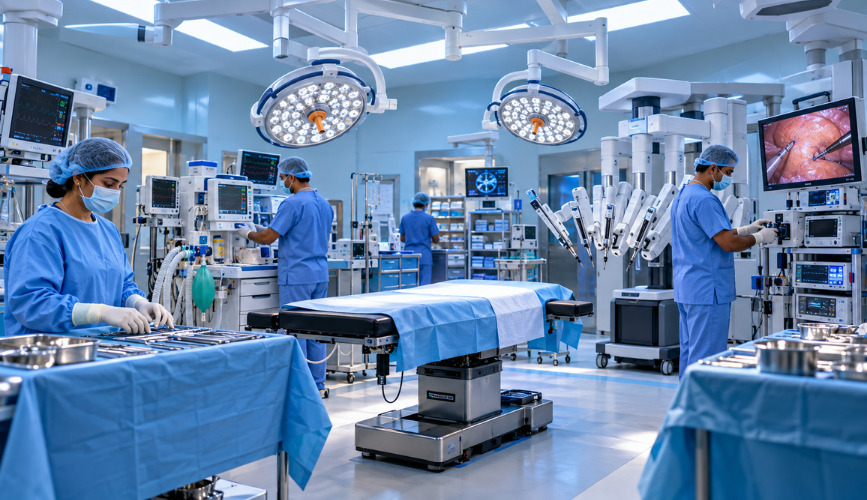
Advanced Operation Theatres
Liver and transplant operations can last many hours and demand accurate technique, stable physiology and a flawless sterile environment. Our Advanced Operation Theatres are planned around these needs, combining infrastructure, technology and trained teams to make complex surgery safer and more predictable.
Theatre Design and Environment
- Controlled air-handling: Laminar or unidirectional airflow and high-efficiency filtration reduce airborne contamination, protecting patients with surgical wounds and weakened immunity.
- Temperature and humidity control: Stable conditions support patient warmth and equipment performance during long operations.
- Zoning and workflow: Separate clean and dirty routes, restricted access and dedicated scrub, preparation and recovery areas.
- Space for large teams: Transplant surgery, especially living-donor operations with parallel donor and recipient procedures, requires room for multiple teams and equipment.
- Emergency readiness: Backup power, medical gas systems and rapid-response protocols.
Advanced Anaesthesia and Monitoring
Liver surgery poses unique anaesthetic challenges, including clotting disturbances, large fluid shifts and sudden blood loss. Our anaesthesia workstations and monitors support:
- Continuous arterial and central venous pressure monitoring
- Cardiac output and fluid-responsiveness assessment
- Depth-of-anaesthesia monitoring
- Blood gas, glucose, lactate and electrolyte checks during surgery
- Point-of-care clotting tests, including viscoelastic testing such as TEG or ROTEM where available, to guide blood product use
- Temperature management and warming systems
- Transoesophageal echocardiography when needed
Anaesthesiologists experienced in liver and transplant surgery plan and manage each case with the surgical team.
Surgical Technology
- Laparoscopic and robotic-ready suites: High-definition 3D and 4K imaging, advanced energy devices and ergonomic layouts for minimally invasive liver, bile duct and pancreatic operations in suitable patients
- Intraoperative ultrasound: Helps locate tumours, map vessels and confirm complete resection
- Advanced dissection and haemostasis tools: Ultrasonic dissectors, vessel-sealing devices, argon beam coagulators and modern staplers
- Fluorescence imaging: Used in selected cases to visualise bile ducts, blood flow or tumour margins
- Cell-salvage systems: Collect and reprocess the patient's own blood to reduce donor transfusion
- Rapid infusion and warming systems: Support patients during major blood loss
- Intraoperative cholangiography and Doppler: Check bile ducts and blood flow in reconstruction and transplant
Transplant-Ready Setup
Transplant operations need coordination between donor retrieval, graft preparation and recipient surgery. The theatres offer:
- Back-table facilities for cold preservation and graft preparation
- Space for parallel donor and recipient teams in living-donor transplants
- Immediate availability of blood products, plasma and platelets
- Dedicated anaesthesia and nursing teams trained in transplant protocols
- Direct link to the transplant ICU, with a planned handover
Infection Prevention Protocols
- Cleaning and disinfection between cases, with terminal cleaning schedules
- Validated sterilisation of instruments, tracked by batch
- Antibiotic prophylaxis according to protocol
- Surgical site infection surveillance and audit
- Strict attire, hand hygiene and traffic control
- Environmental monitoring, including air and surface sampling at regular intervals
Safety Culture
Every operation follows a structured safety process:
- Pre-operative briefing: Team members review the plan, risks and equipment
- WHO Surgical Safety Checklist: Patient identity, site, allergies and equipment confirmed before incision
- Time-outs: At critical points during complex surgery
- Instrument and swab counts: To prevent retained items
- Post-operative debrief: To document learning and improve processes
Blood and Fluid Management
Close coordination with the blood bank ensures that appropriate products are available. The team uses patient blood management principles: optimising haemoglobin before surgery, minimising blood loss during surgery and transfusing only when clinically indicated.
Coordination With Other Units
- Pre-operative assessment clinic: Ensures patients are medically optimised
- Imaging department: Provides 3D reconstructions and volumetric analysis for planning
- Liver ICU and post-anaesthesia care unit: Smooth handover for recovery
- Laboratory and transfusion medicine: Immediate results and blood supply
- Interventional radiology: Hybrid procedures or rescue interventions when required
Patient Experience
We aim to reduce anxiety around surgery. Patients receive clear instructions on fasting, medicines and admission, and family members are informed about waiting areas and updates during long operations. After surgery, teams communicate outcomes and recovery plans to families as soon as it is safe.
Quality and Audit
Regular audits of surgical outcomes, infection rates, blood use and complications help refine practices. Teams review cases in morbidity and mortality meetings and update protocols in line with evolving evidence.
Learn More
To know more about surgical facilities for liver, bile duct, pancreatic and transplant procedures, contact LiverMitra. Our team can explain what to expect on the day of surgery and answer your questions.

