




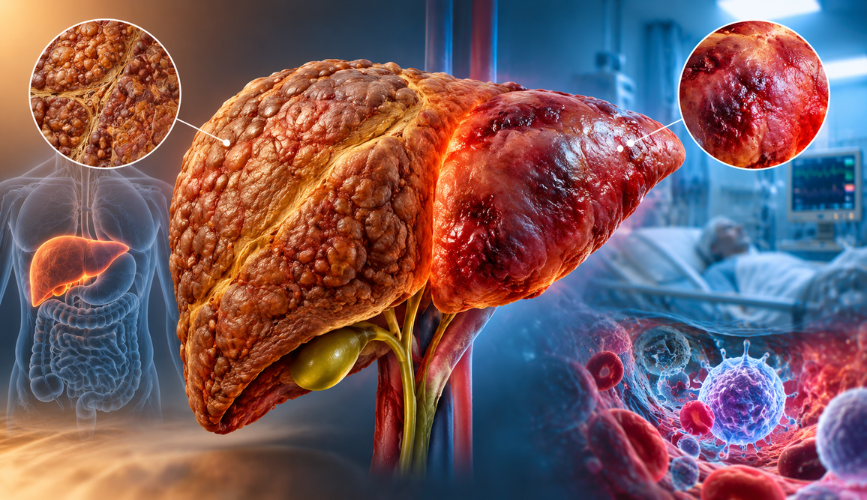
Acute-on-Chronic Liver Failure (ACLF) Care
Acute-on-chronic liver failure is a syndrome in which a patient with chronic liver disease, with or without known cirrhosis, suddenly deteriorates and develops failure of the liver and often other organs. It differs from ordinary decompensation because there is a clear acute trigger and organ failure, and the short-term mortality is high without treatment. At the same time, ACLF can be reversible in a significant proportion of patients, so aggressive early care is worthwhile.
How Is It Defined?
Different medical societies use slightly different definitions. The Asia-Pacific (APASL) definition emphasises acute hepatic injury with jaundice and coagulopathy in patients with chronic liver disease, complicated by ascites or encephalopathy within four weeks. The European (EASL-CLIF) definition focuses on the number of failing organs, including liver, kidney, brain, coagulation, circulation and lungs, in patients with cirrhosis. Your doctors will use the definition and scoring system that suits their clinical practice.
Common Triggers
- Bacterial or fungal infections: Pneumonia, urinary infection, spontaneous bacterial peritonitis and sepsis
- Alcohol: Recent heavy drinking or severe alcoholic hepatitis
- Viral flares: Reactivation of hepatitis B, or acute infection with hepatitis A or E
- Gastrointestinal bleeding: Especially variceal bleeding
- Drugs and toxins: Including herbal medicines and anti-tuberculosis drugs
- Surgery or large-volume procedures
- Unknown triggers: In some patients, no trigger is identified
Symptoms and Warning Signs
- Rapid worsening of jaundice
- Increasing abdominal swelling or leg swelling
- Confusion, sleepiness or behavioural changes
- Fever, chills or abdominal pain
- Vomiting blood or black stools
- Decreased urine output
- Breathlessness
Patients with known liver disease should be taken to hospital immediately if any of these signs appear.
Assessment
Doctors assess severity using clinical review and tests such as liver function tests, INR, creatinine, lactate, blood counts, cultures, viral markers, ultrasound and imaging. Scores such as CLIF-C ACLF, MELD, MELD-Na and APASL ACLF research consortium (AARC) scores estimate severity and prognosis. Repeated assessment over the first few days is very informative, because improvement or worsening in the early period guides decisions on transplant and the intensity of support.
Principles of Treatment
1. Treat the precipitant
- Broad-spectrum antibiotics quickly when infection is suspected, guided by cultures
- Antivirals such as tenofovir or entecavir for hepatitis B flare
- Alcohol abstinence and specific treatment for severe alcoholic hepatitis in selected patients
- Endoscopic therapy and drug treatment for variceal bleeding
- Stopping harmful drugs
2. Support failing organs
- Kidneys: Albumin, vasoconstrictors such as terlipressin for hepatorenal syndrome and dialysis if required
- Brain: Lactulose, rifaximin, treatment of triggers and airway protection in severe encephalopathy
- Circulation: Vasopressors and careful fluid management
- Lungs: Oxygen, non-invasive ventilation or mechanical ventilation
- Coagulation: Treat bleeding and correct only where clinically indicated
3. Prevent complications
- Early nutrition support, avoiding prolonged fasting
- Prevention of pressure injuries, clots and hospital-acquired infections
- Blood sugar and electrolyte control
- Physiotherapy and mobilisation when possible
4. Consider advanced therapies
- Plasma exchange and other liver-support techniques in selected patients, as a bridge to recovery or transplant, based on ongoing research and centre experience
- Growth-factor therapy such as G-CSF has been studied in some patients and may be considered in specialised centres
Liver Transplant in ACLF
For patients who do not improve despite optimal treatment, liver transplantation offers the best chance of long-term survival. Transplant decisions in ACLF are time-sensitive. Patients with several organ failures, or with a high and rising score, may deteriorate quickly, so transplant evaluation should begin as soon as the diagnosis is made, not after weeks of treatment. Living-donor transplant is often used in India when deceased donors are unavailable. Active infection, severe multi-organ failure or uncontrolled alcohol use can complicate candidacy, and the team assesses these carefully.
Prognosis
Outcome depends on the number of organs failing, age, trigger, response to treatment in the first days and availability of transplant. Patients with fewer organ failures and early treatment have better chances of recovery. Survivors need follow-up because their underlying cirrhosis persists and the risk of repeat decompensation is high.
Life After ACLF
- Stay completely away from alcohol
- Take prescribed antivirals or other medicines regularly
- Follow a high-protein, adequate-calorie diet with small frequent meals
- Attend regular follow-up and screening for varices and liver cancer
- Vaccinate as advised and treat infections early
- Avoid painkillers such as NSAIDs and unverified herbal remedies
- Ask about a transplant evaluation if liver function remains poor

