




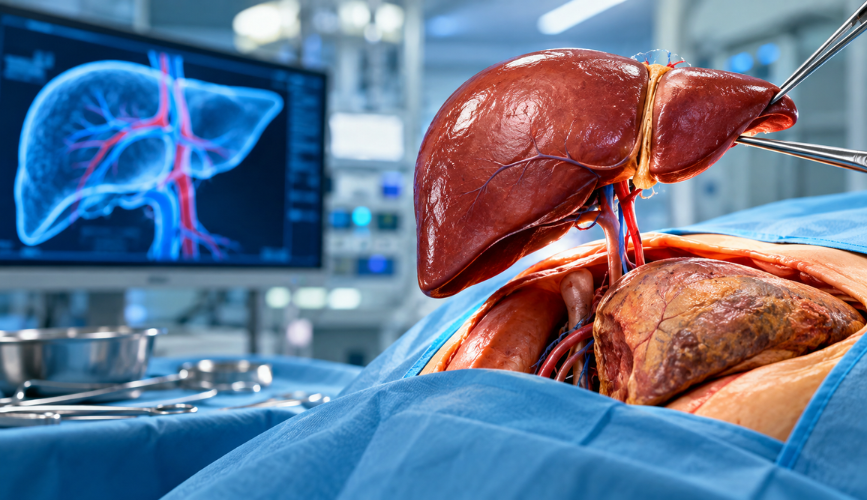
Liver Transplantation
Liver transplantation is a surgical operation in which a diseased liver is removed and replaced by a healthy liver or part of one. It is the only treatment that can replace a liver that has failed beyond repair, and it can restore health and independence to people who might otherwise not survive.
When Is Transplant Considered?
- Decompensated cirrhosis: Ascites, variceal bleeding, hepatic encephalopathy, jaundice or hepatorenal syndrome that are not controlled by other treatments
- Acute liver failure: When the liver is unlikely to recover on its own
- Acute-on-chronic liver failure: When organ failure does not improve with intensive care
- Liver cancer: Hepatocellular carcinoma within accepted criteria
- Metabolic and genetic conditions: Such as Wilson disease, tyrosinaemia, urea cycle disorders and certain others
- Cholestatic disease: Advanced primary biliary cholangitis, primary sclerosing cholangitis and biliary atresia
- Other indications: Polycystic liver disease, and severe intractable symptoms in selected patients
Referral should be considered when complications first appear or when the MELD score reaches about 15, rather than waiting until the patient is critically ill.
Types of Liver Transplant
- Deceased-donor transplant: A whole liver from a brain-dead donor whose family has consented to donation
- Living-donor transplant: Part of a healthy person's liver is donated, and both livers regenerate. This is widely used in India
- Split-liver transplant: One deceased-donor liver is divided for two recipients
- Auxiliary transplant: A partial graft is placed alongside part of the native liver in selected cases
- Combined transplants: Such as simultaneous kidney-liver transplant
The Evaluation Process
Evaluation checks that transplant is needed, safe and likely to succeed. It typically includes:
- Blood tests, infection screening and blood group testing
- Imaging of the liver and blood vessels
- Heart, lung and kidney assessment
- Endoscopy and cancer screening
- Nutritional assessment and dental review
- Psychological, social and financial evaluation, including assessment of alcohol use where relevant
- Review by a multidisciplinary committee
Some conditions, such as uncontrolled infection, advanced heart or lung disease, extrahepatic cancer or ongoing substance use, may delay or prevent transplant.
Waiting and Allocation
For deceased-donor transplants, patients are registered on a waiting list and prioritised according to disease severity (MELD or PELD scores), blood group, body size and urgency, following state and national rules. Patients on the list must remain reachable and follow medical advice, since their condition can change. Living-donor transplant may allow surgery to be scheduled sooner.
Living Donors
A living donor must be a healthy adult, usually a close relative, who donates voluntarily after thorough medical and psychological evaluation and legal approval as required by law. Donor safety is the first priority, and donors are counselled independently.
The Operation
The surgery is performed under general anaesthesia and usually lasts several hours. The surgeon removes the diseased liver and connects the new liver's blood vessels and bile duct. In living-donor transplants, two teams operate in parallel on donor and recipient.
Recovery in Hospital
After surgery, patients are monitored in the ICU, then move to a ward. Most stay in hospital for around two to three weeks, depending on their condition. Physiotherapy, nutrition and education about medicines and infection prevention begin early.
Life After Transplant
- Immunosuppression: Medicines to prevent rejection are taken, usually for life, with regular blood level checks
- Follow-up: Frequent visits initially, then less often as the patient stabilises
- Infection prevention: Hygiene, vaccination and prompt treatment of infections
- Healthy lifestyle: Balanced diet, exercise, no alcohol or tobacco
- Monitoring: For rejection, kidney function, blood pressure, diabetes, cholesterol, bone health and skin cancer risk
- Return to normal life: Many recipients return to work, study, travel and family life
Risks
Risks include bleeding, infection, bile duct problems, blood clots in graft vessels, rejection, side effects of immunosuppressants and recurrence of the original disease in some patients. Your team will explain your individual risks and expected outcomes.
Benefits
Transplant can restore liver function, resolve complications, improve energy and quality of life, and give many patients long-term survival. It also allows people to return to activities they could not do while ill.
Preparing Financially and Emotionally
Transplant involves significant costs for surgery, hospital stay, medicines and follow-up. Families should discuss expenses with the transplant coordinator, explore insurance, government schemes and charitable support early. Emotional support for both patients and families is also important, as the process can be stressful.
Why Early Referral Matters
Patients who are referred earlier are generally stronger and better able to tolerate surgery. Waiting until the last moment reduces options. If you have cirrhosis with complications, liver cancer or acute liver failure, ask about transplant evaluation.

