




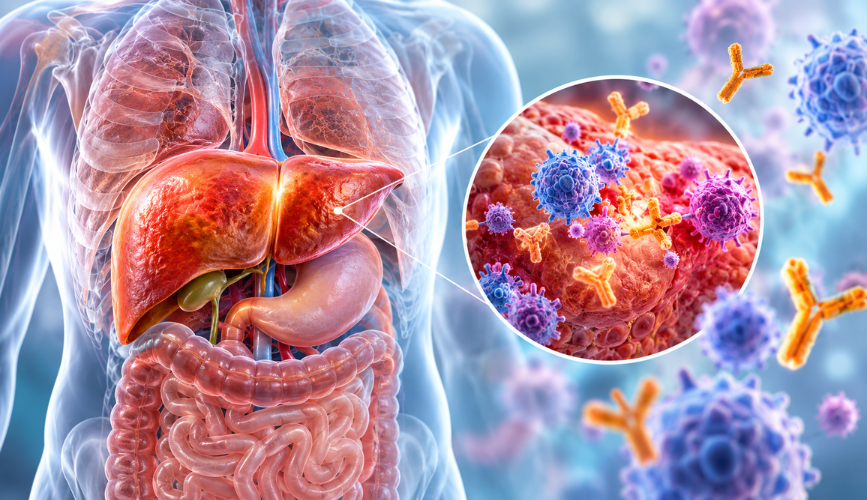
Autoimmune Hepatitis
Autoimmune hepatitis (AIH) is a long-term liver disease in which the immune system, which normally protects the body from infections, attacks the liver instead. The result is ongoing inflammation that can damage liver cells and, over time, cause scarring. The exact cause is not fully understood, but genetic susceptibility combined with environmental triggers such as infections, medicines or other factors is thought to play a role.
Who Is Affected?
AIH can occur at any age, from childhood to old age, and is more common in women. It often coexists with other autoimmune conditions such as thyroid disease, type 1 diabetes, celiac disease, rheumatoid arthritis, ulcerative colitis or Sjögren's syndrome.
Types of Autoimmune Hepatitis
- Type 1: The most common form, occurring in adults and children, associated with antinuclear antibodies (ANA) and anti-smooth muscle antibodies (ASMA).
- Type 2: Less common, mostly seen in children and young people, associated with anti-LKM1 antibodies and often more aggressive.
Symptoms
Some patients have no symptoms and are diagnosed after abnormal blood tests. Others may experience:
- Persistent fatigue
- Yellowing of eyes and skin
- Abdominal discomfort
- Joint pain and muscle aches
- Nausea and loss of appetite
- Dark urine and itching
- Skin rashes or absent menstrual periods in some women
AIH can present suddenly as acute hepatitis or even acute liver failure, or slowly over years. Some patients are first diagnosed when they already have cirrhosis.
How Is It Diagnosed?
Diagnosis requires excluding other causes of liver disease and combining several findings:
- Liver function tests: Elevated SGOT and SGPT
- Immunoglobulin G (IgG): Often raised
- Autoantibodies: ANA, ASMA, anti-LKM1 and others
- Viral, metabolic and drug-related tests: To rule out hepatitis B and C, Wilson disease, fatty liver and drug-induced injury
- Ultrasound and FibroScan: To assess liver structure and stiffness
- Liver biopsy: Usually recommended to confirm the diagnosis and stage the disease
Doctors use scoring systems that combine these results for accuracy.
Treatment
The goal of treatment is to suppress the immune attack, achieve normal liver tests and prevent progression.
- Corticosteroids (prednisolone or prednisone): Used first to bring inflammation under control quickly.
- Azathioprine: Added to maintain remission and allow steroid doses to be reduced, lowering long-term side effects.
- Other immunosuppressants: Mycophenolate, tacrolimus or others may be used if standard therapy is not tolerated or does not work.
- Duration: Treatment usually continues for at least two to three years, and many patients need long-term maintenance. Stopping medicines too early can cause relapse.
Patients on immunosuppressants need regular blood counts and liver tests, bone health monitoring, blood sugar and blood pressure checks and vaccination guidance.
Living With Autoimmune Hepatitis
- Take medicines exactly as prescribed and never stop them suddenly
- Attend all follow-up visits and blood tests
- Eat a balanced diet with enough calcium and vitamin D
- Avoid alcohol and unnecessary herbal or over-the-counter medicines
- Report fever, infections or new symptoms promptly
- Maintain a healthy weight and stay physically active
Women planning pregnancy should discuss it with their doctor beforehand, since many patients can have safe pregnancies with proper planning and medication adjustment.
Complications
If untreated or poorly controlled, AIH can cause cirrhosis, portal hypertension, ascites, variceal bleeding, liver failure and an increased risk of liver cancer. Some patients may need liver transplantation, although with modern therapy this is less common.
Outlook
With timely diagnosis and treatment, most people achieve remission and enjoy a good quality of life and normal life expectancy. Regular monitoring is essential because relapses can occur.

