




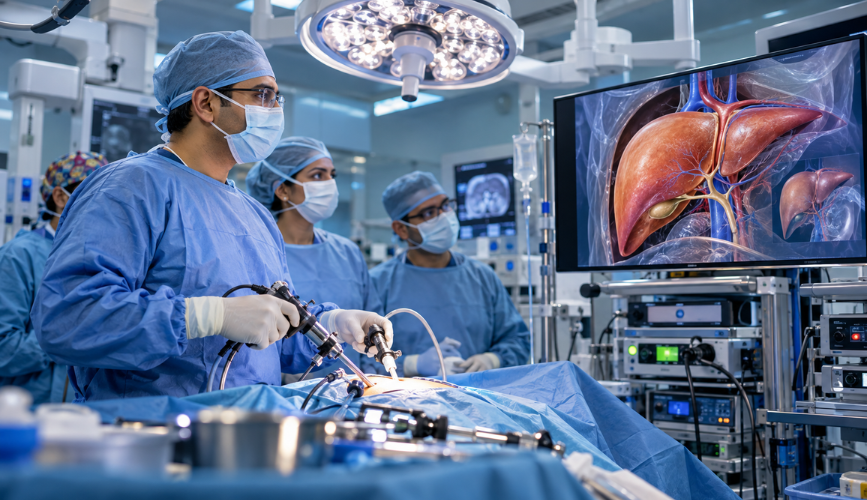
HPB & Liver Surgery
The liver, bile ducts, gallbladder and pancreas are closely connected and surgically demanding. Operating on them requires detailed anatomical knowledge, precise technique and strong perioperative support. Our HPB & Liver Surgery service brings specialised surgeons, anaesthesiologists, hepatologists, radiologists and intensivists together for patient-centred decision-making.
Conditions Treated
- Hepatocellular carcinoma and other primary liver tumours
- Colorectal and other liver metastases
- Cholangiocarcinoma (bile duct cancer) and gallbladder cancer
- Benign liver tumours and large or symptomatic cysts
- Hydatid cysts, liver abscesses and complicated infections
- Gallstone disease, bile duct stones and bile duct injuries
- Biliary strictures, choledochal cysts and biliary atresia
- Pancreatic tumours, chronic pancreatitis and its complications
- Portal hypertension requiring surgical or radiological intervention
- Liver trauma
- Advanced disease requiring liver transplantation
Surgical Procedures
Liver surgery
- Anatomical and non-anatomical liver resection
- Major hepatectomy with portal vein embolisation to enlarge the remnant liver where needed
- Laparoscopic and robotic liver resection in selected patients
- Combined liver and bile duct resection
- Ablation and parenchyma-sparing techniques
Biliary surgery
- Laparoscopic cholecystectomy
- Bile duct exploration and repair
- Hepaticojejunostomy and other bilio-enteric reconstructions
- Choledochal cyst excision
- Kasai portoenterostomy in infants
Pancreatic surgery
- Whipple procedure (pancreaticoduodenectomy)
- Distal pancreatectomy
- Drainage and resection procedures for chronic pancreatitis
- Management of pancreatic pseudocysts and necrosis
Portal hypertension surgery
- Surgical shunts and devascularisation in selected cases
- Coordination with interventional radiology for TIPS and embolisation
Multidisciplinary Tumour Board
Complex cases are discussed by a team that may include surgeons, hepatologists, oncologists, radiologists, pathologists and transplant specialists. This shared review helps decide whether surgery, ablation, embolisation, systemic therapy or transplant offers the best chance, avoiding one-size-fits-all decisions.
Assessing Fitness for Surgery
A diseased liver tolerates surgery less well than a healthy one. Before any major operation, we assess:
- Liver function using Child-Pugh and MELD scores, and dynamic tests where relevant
- Portal hypertension, platelet count and varices
- Volume of the future liver remnant using CT or MRI
- Nutrition, kidney function, heart and lung health
- Anaemia, diabetes and other medical conditions
If risk is high, alternatives such as ablation, embolisation or transplant are considered, and patients are optimised before surgery.
Minimally Invasive Approaches
Where suitable, laparoscopic and robotic techniques reduce blood loss, pain and hospital stay. Not every patient qualifies, since tumour size, location and liver condition matter. Your surgeon will recommend the safest approach rather than the newest one.
Blood Conservation and Safety
Liver surgery has traditionally carried a bleeding risk. Techniques such as low central venous pressure anaesthesia, energy devices, intraoperative ultrasound, vascular control and cell salvage help reduce blood loss. Transfusion medicine support is available around the clock.
Perioperative Care
- Pre-habilitation: Nutrition and exercise before surgery improve recovery
- Enhanced recovery protocols: Early mobilisation, early feeding, effective pain control and minimal drains where safe
- ICU or high-dependency care: After major resections and transplants
- Monitoring of liver function: Blood tests and Doppler imaging after surgery
- Complication surveillance: For bleeding, bile leak, infection and post-hepatectomy liver failure
Recovery
Recovery depends on the procedure. Patients undergoing gallbladder removal often go home within a day or two, while major liver or pancreatic surgery may need a longer stay. The liver regenerates, usually recovering volume over weeks to months. Follow-up includes wound checks, blood tests, imaging and oncology review when relevant.
Risks
Risks include bleeding, infection, bile leak, blood clots, liver failure after surgery, pancreatic fistula after pancreatic operations and anaesthetic complications. These risks vary by procedure and patient and are discussed openly before consent.
Transplant as an Option
When disease cannot be treated by resection alone, such as advanced cirrhosis with early liver cancer, liver transplantation may offer a better outcome. Our HPB and transplant teams work together, so patients are assessed for the best overall strategy rather than being confined to one option.
Second Opinions
Patients diagnosed with liver or pancreatic tumours are encouraged to seek expert review before deciding. We offer second-opinion services, reviewing scans, pathology and previous records.

